Description
Arowana
Osteoglossum bicirrhosumn
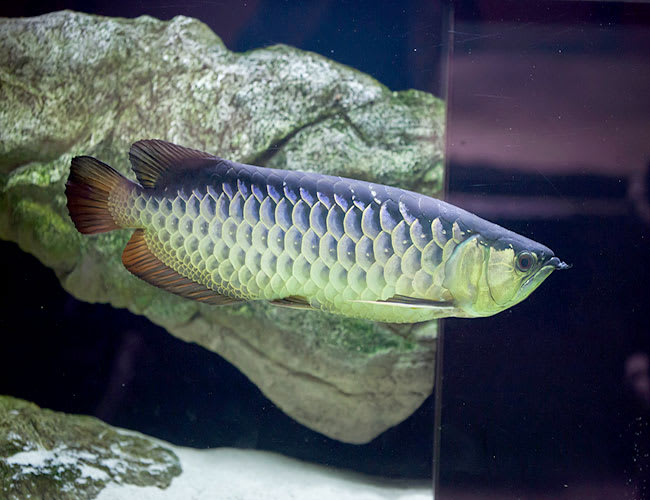
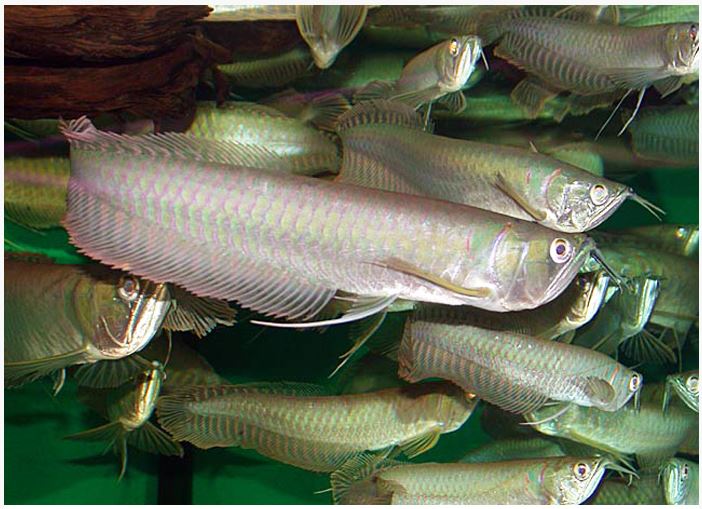
Adults pictured. We ship young silver Arowana average 2.5″-3″ and may still have egg sacks attached to them. They are healthy and will explode with growth once you start feeding them high protein foods like freeze dried bloodworms, mealwormsare also excellent!
We only offer Silver Arowanas
if you are interested in Colored Blueberry Arowana or Colored Strawberry Arowana you need to email us to be put on a waiting list for them as they are available from time to time. info@azgardens.com
While relatively unfussy fish, the Silver Arowana will appreciate some surface cover in the form of floating plants or branches. Does best if there is a high proportion of dissolved oxygen and moderate degree of water movement, so, external filters, powerheads, airstones, and the like are a good idea. Consider having an aquarium with a tightly-fitting cover as they are prodigious jumpers if you dont include floating surface plants. They will prefer a tank that is at least 125-gallons or more with a fine gravel bottom, and heavily planted with suitable aquatic plants native to its region(see below). Softer, blackwater with lots of open space above for swimming is ideal. Water Temperature 75 – 85F / pH: 5.0 – 7.5 / Hardness 36 – 268 ppm. Carnivore that will eat other smaller fish it can fit into his mouth. Freeze-dried ocean plankton, krill, bloodworms and pellet foods are recommended. Pacu, Knifefish, Plecostomus, Catfish, and Bichirs may make good companions for the Silver Arowana.
The Silver Arowana is native to the Amazon basin in Brazil, Peru, Colombia and Ecuador, plus the Rupununi and Oyapock systems in Guyana and French Guiana. In nature they prefer to inhabit slow-moving to still tributaries, backwaters and lagoons during the natural dry season, and eventually moves into areas of flooded forest during periods of inundation. As mentioned this fish is mainly a surface dweller, preying on smaller fish and terrestrial insects in its habitat. It is famed for its ability to leap high out of the water to catch bugs (see notation above for lid).
After breeding, only the male is responsible for carrying the large eggs in his mouth where they will mature over the next 50 to 60 days! That’s truly a long time, considering many other fish only need a couple days for eggs to hatch.
Size at shipping and only approximate to give you an idea: Appx 2.5 – 3.0″+